 Bill’s Bridge
OUR STORY
Why We Built Bill’s Bridge
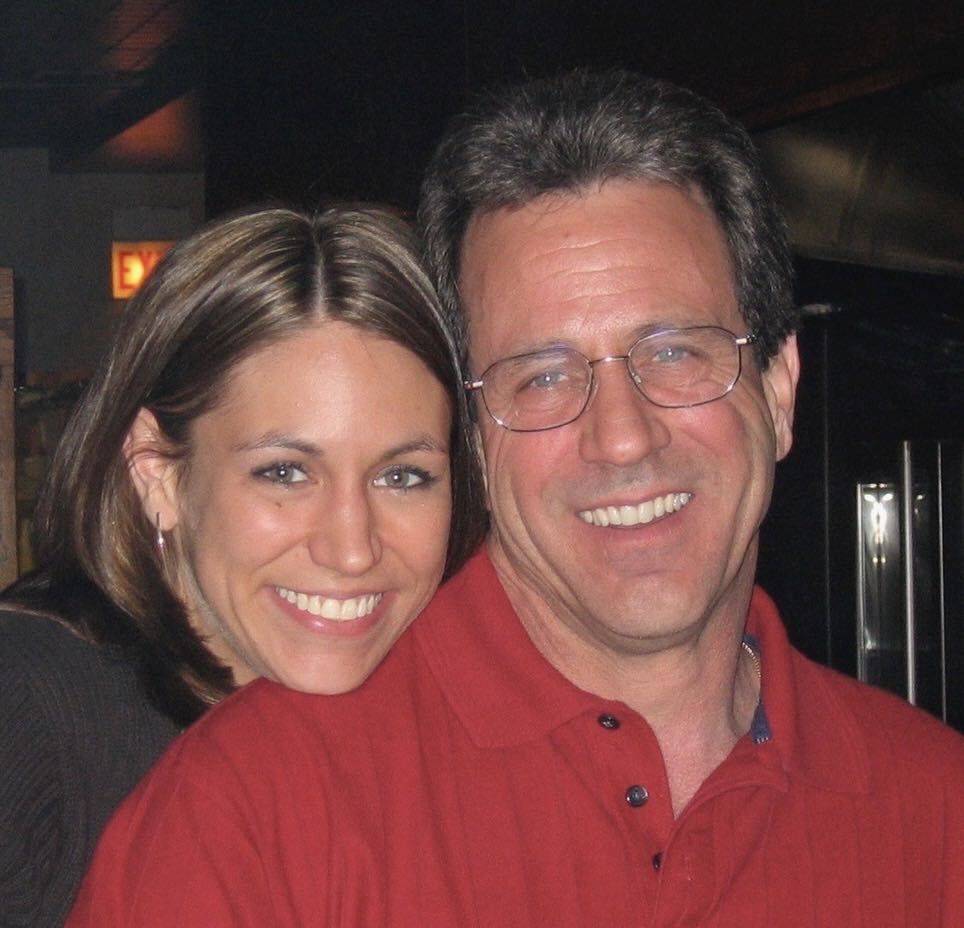
Bill’s Bridge was inspired by my dad, Bill.
When my dad was diagnosed with Stage IV lung cancer that had metastasized to his brain and spine, our family suddenly found ourselves in a world we knew nothing about.
Overnight, we were trying to manage medications, doctor appointments, scans, chemotherapy, radiation, symptoms, nutrition, hydration, bowel movements, questions for his doctors, family updates, caregiving schedules, and eventually conversations about hospice and decisions none of us were prepared to make. And we were trying to do all of that while also trying to be his family.
There were so many things to remember, so many people involved, and so much information coming at us from different directions.
It was important to our family that someone was able to accompany my dad to every appointment. I had the most flexible job and schedule, so I was able to consistently attend. I brought my laptop to every appointment. I took notes, used voice recordings and AI, researched what we were hearing, kept track of questions, managed calendars, and created my own systems to organize everything for the family so we could stay informed together.
My siblings, mom, and I used shared documents so we could add notes and stay up to date on Dad’s care together. We had multiple text threads going at once to coordinate appointments, medications, updates, schedules, and who was doing what.
It was overwhelming, but it was necessary. The problem was that everything was fragmented.
One piece of information was in a calendar. Another was in a shared document. Medications were somewhere else. Research was spread across different websites. Appointment notes lived in different places. Questions, family updates, text messages, schedules, recordings, and decisions were scattered across tools that were never designed to work together.
In the middle of everything we were trying to manage, my dad asked me, “Can’t you just build me an app for this?”
That’s the fixer in him.
Our story, in Melissa’s words
Video coming soon
.jpg)
Room for Compassion
.jpg?width=350&height=192&name=IMG_0089%20(1).jpg)
I remember one appointment when we were told about Gamma Knife treatment, a targeted form of radiation for my dad’s brain. We were scared. We were trying to understand what was happening, what the treatment involved, and what it meant for him. We were handed a piece of paper explaining it.
I remember sitting there thinking, where is the compassion?
Here we were facing something terrifying and life changing, and it felt like we were expected to take a piece of paper home, understand it, process it, and somehow figure out what came next.
That moment stayed with me.
Cancer does not just create a need for medical care. It creates hundreds of questions that patients and families may have never had to think about before.
I would take Dad to his appointments and look around the waiting room. Sometimes I would see people sitting there by themselves, including older patients navigating appointments and cancer treatment alone. My heart broke for them.
I kept thinking, how could anyone possibly do this alone?
Our family had each other.
My dad had people going to appointments with him, taking notes, asking questions, researching, managing medications, keeping everyone informed, and helping him navigate what came next.
And even with all of us helping, it was incredibly difficult.
What about the person sitting across the waiting room who did not have that?
What about someone who was not comfortable with technology?
Someone who did not know what to research or what questions to ask?
Someone without family nearby?
Or someone whose family desperately wanted to help but had no simple way to stay connected and organized?
I remember telling my dad that I wanted to quit my job and help people going through this because no one should have to navigate cancer alone.
That feeling never left me.
I started creating systems for my dad because that was what our family needed. I built a calendar and medication management system and found ways to organize the information we needed every day.
But I began to realize the problem was much bigger than our family.
Families should not have to stitch together calendars, shared documents, notes, spreadsheets, websites, apps, recordings, AI tools, search results, and multiple text threads just to stay organized through cancer.
They should not have to search the internet late at night trying to understand a treatment, palliative care, hospice, end-of-life planning, or what questions they should be asking next.
And an individual going through cancer should not need a whole family or a background in technology just to figure out how to manage everything.
There should be one place designed for what patients and families are actually going through.
For the Family Coming Next
That is where Bill’s Bridge came from.
The name is also a reflection of what got us through my dad’s cancer journey.
A bridge connects people across something difficult to cross alone.
For us, that bridge was each other.
It was my mom, my siblings, our family, and the people who showed up again and again.
It was the people who helped carry the weight when one person could not carry it all.
My dad had always been that kind of person for everyone else. He was steady, dependable, and there when someone needed him.
Before cancer entered our lives, my dad was the person everyone could count on and the most selfless person I’ve ever known. He helped everyone and anyone, not because he wanted recognition, but because that was simply who he was.
He loved music, cars, working with his hands, fixing anything that was broken, and taking care of the people around him. He was capable, steady, resourceful, and nurturing.
He was always working on something.
.jpg)
The Meaning of the Bridge and His Dog
.jpg?width=480&height=640&name=IMG_4844%20(2).jpg)
And somewhere on whatever he was building, fixing, designing, or creating, he would often draw a little dog.
That dog became his trademark.
It was unmistakably my dad. A small, simple drawing left behind on his projects almost like his signature.
Today, that little dog has become part of Bill’s Bridge, a quiet tribute to my dad and a reminder of the man behind the name.
When he became sick, the people who loved him became that bridge for him.
That is what I want Bill’s Bridge to represent.
The bridge is the people who stand beside you.
The family member who comes to the appointment.
The friend who remembers the question you forgot to ask.
The person managing medications, sending updates, driving to treatment, researching what comes next, or simply sitting with you on a hard day.
Not everyone’s bridge will look the same.
Some people may have a large family surrounding them.
Others may have one trusted person.
Some may be navigating cancer more independently and need additional tools and guidance to help create that sense of steadiness.
Bill’s Bridge was created to help patients and families carry everything that happens around a cancer diagnosis and help strengthen the bridge between the people walking through it together.
I wanted to create something that brought compassion back into that experience.
Not just another app with tasks and trackers.
A place with tools and resources that could help someone feel more informed, more organized, more prepared, and less alone.
Because when I think about what Bill’s Bridge should feel like, I think about my dad.
Steady when things feel uncertain.
Helpful without being overwhelming.
Resourceful when you do not know where to begin.
Compassionate when things are hard.
There when you need someone.
.png?width=1774&height=887&name=b8f9c1dc-41ce-4575-992b-8c3bdcea62d8%20(1).png)
Founder, Bill's Bridge